Donkey Secondary Antibodies
- (26)
- (4)
- (15)
- (4)
- (12)
- (6)
- (8)
- (2)
- (15)
- (4)
- (2)
- (4)
- (8)
- (4)
- (4)
- (8)
- (3)
- (3)
- (44)
- (61)
- (8)
- (1)
- (1)
- (21)
- (11)
- (18)
- (20)
- (20)
- (6)
- (18)
- (15)
- (11)
- (9)
- (52)
- (9)
- (78)
- (4)
- (24)
- (2)
- (2)
- (23)
- (4)
- (4)
- (4)
- (31)
- (26)
- (1)
- (1)
- (1)
- (1)
- (1)
- (6)
- (16)
- (16)
- (16)
- (66)
- (1)
- (781)
- (2)
- (1)
- (21)
- (9)
- (3)
- (142)
- (31)
- (2)
- (77)
- (218)
- (20)
- (38)
- (6)
- (10)
- (8)
- (2)
- (1)
- (1)
- (69)
- (4)
- (1)
- (1)
- (3)
- (3)
- (1)
- (1)
- (1)
- (22)
- (86)
- (2)
- (4)
- (778)
- (15)
- (14)
- (37)
- (451)
- (250)
- (87)
- (37)
- (212)
- (223)
- (20)
- (31)
- (416)
- (62)
- (161)
- (62)
- (46)
- (2)
- (3)
- (5)
- (4)
- (520)
Filtered Search Results
Biotium HIF1α(HIF1A-84), CF647 conjugate, 0.1mg/mL
HIF1 (hypoxia-inducible factor 1), a heterodimeric transcription factor complex central to cellular response to hypoxia, consists of two subunits (HIF-1 alpha and HIF-1 beta) which are basic helix-loop-helix proteins of the PAS (Per, ARNT, Sim) family. Expression of HIF-1 alpha protein is regulated by cellular oxygen level alterations as well as in oxygen-independent manner via different cytokines (through the PI3K-AKT-mTOR pathway), growth factors, oncogenic activation, or loss of tumor suppressor function etc. In normoxic cells, HIF-1 alpha is proline hydroxylated leading to a conformational change that promotes its binding to the VLH (von Hippel Lindau) protein E3 ligase complex; ubiquitination and followed by rapid proteasomal degradation. Hypoxia as well as chemical hydroxylase inhibitors (desferrioxamine, cobalt etc.) inhibit HIF-1 alpha degradation and lead to its accumulation in the cells, whereas, contrastingly, HIF-1 beta/ARNT (AhR nuclear translocator) remains stab
Non-distribution item offered as a customer accommodation; additional freight charges may apply.
Learn More
Biotium Nucleophosmin (Acute Myeloid Leukemia Marker)(NPM1/3286), CF647 conjugate, 0.1mg/mL
Recognizes a 33 kDa glycoprotein, identified as Nucleophosmin (NPM). It is predominantly localized in the nucleus of cells in most tissues. NPM is involved in ribosomal assembly and rRNA transport. It is an abundant protein that is highly phosphorylated by Cdc2 kinase during mitosis. This phosphoprotein moves between the nucleus and the cytoplasm. It is thought to be involved in several processes including regulation of the ARF/p53 pathway. A number of genes are fusion partners, in particular the anaplastic lymphoma kinase gene on chromosome 2. Mutations in exon 12 affecting the C-terminus of the protein are associated with an aberrant cytoplasmic location. Mutations in this gene are associated with acute myeloid leukemia. The antibody may be a useful aid for classification of acute myeloid leukemia. Primary antibodies are available purified, or with a selection of fluorescent CF Dyes and other labels. CF Dyes offer exceptional brightness and photostability. Note: Conjugat
Non-distribution item offered as a customer accommodation; additional freight charges may apply.
Learn More
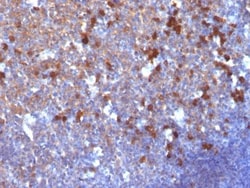
Biotium CF633 Donkey Anti-Mouse IgG (H+L), Highly Cross-Adsorbed, 2 mg/mL
Fluorescently labeled Donkey Anti-Mouse IgG (H+L), Highly Cross-Adsorbed is prepared by labeling high quality antibody with a selection of fluorescent CF dyes and other labels. CF dyes are next-generation fluorescent dyes with advantages brightness, photostability, and conjugate specificity compared to other fluorescent dyes. Far-red fluorescent CF633 has excitation/emission at 630/650 nm. Supplied at 2 mg/mL in PBS, 50% glycerol, 2 mg/ml BSA, 0.05% sodium azide.
Non-distribution item offered as a customer accommodation; additional freight charges may apply.
Learn More
Biotium TIGIT / VSTM3 / VSIG9 (Immune Checkpoint for Cancer)(TIGIT/3017), CF647 conjugate, 0.1mg/mL
TIGIT is a checkpoint inhibitor which binds with high affinity to the poliovirus receptor (PVR), causing increased IL10 secretion, decreased IL12B secretion. TIGIT binding to PVR also causes the suppression of T cell activation by promoting the generation of mature immuno-regulatory dendritic cells. It is expressed at low levels on natural killer (NK) cells, as well as peripheral memory and regulatory CD4 T cells. At the protein level, it is upregulated following the activation of these cells. Functionally, TIGIT is similar to CTLA4. The ligands for TIGIT include CD155 (signal abrogation) and CD226 (signal stimulation). It has been demonstrated to be upregulated on T cells in many cancers and is an immuno-oncology target for therapy. Primary antibodies are available purified, or with a selection of fluorescent CF Dyes and other labels. CF Dyes offer exceptional brightness and photostability. Note: Conjugates of blue fluorescent dyes like CF405S and CF405M are not recomm
Non-distribution item offered as a customer accommodation; additional freight charges may apply.
Learn More
Abcam Donkey Anti-Mouse IgG H&L (Alexa Fluor 647)
Donkey Anti-Mouse IgG H&L (Alexa Fluor 647)
The product is subject to the following: Abcam Restricted Use Statement
Non-distribution item offered as a customer accommodation; additional freight charges may apply.
Learn More
Biotium Tyrosinase(T311), CF647 conjugate, 0.1mg/mL
Recognizes a cluster of proteins between 70-80 kDa, identified as tyrosinase. Occasionally a minor band at 55 kDa is also detected. This MAb shows no cross-reaction with MAGE-1 and tyrosinase-related protein 1, TRP-1/gp75. Tyrosinase is a copper-containing metalloglycoprotein that catalyzes several steps in the melanin pigment biosynthetic pathway; the hydroxylation of tyrosine to L-3,4-dihydroxy-phenylalanine (dopa), and the subsequent oxidation of dopa to dopaquinone. Mutations of the tyrosinase gene occur in various forms of albinism. Tyrosinase is one of the targets for cytotoxic T-cell recognition in melanoma patients. Staining of melanomas with this MAb shows tyrosinase in melanotic as well as amelanotic variants. This MAb is a useful marker for melanocytes and melanomas.Primary antibodies are available purified, or with a selection of fluorescent CF Dyes and other labels. CF Dyes offer exceptional brightness and photostability. Note: Conjugates of blue fluorescent d
Non-distribution item offered as a customer accommodation; additional freight charges may apply.
Learn More
Biotium Aurora B (Proliferation Marker)(rAURKB/1592), CF647 conjugate, 0.1mg/mL
This antibody recognizes a protein of 39 kDa, which is identified as Aurora kinase B (or Aurora B). Aurora B is a serine/threonine protein kinase and component of the chromosomal passenger complex (CPC), a complex that acts as a key regulator of mitosis. It is important for accurate chromosome segregation, cytokinesis, protein localization to the centromere and kinetochore, correct microtubule-kinetochore attachment, and regulation of the mitotic checkpoint. Aurora B forms a tight complex with inner centrosome protein and survivin. Inactivation of any of these proteins causes similar defects in chromosome segregation. A significant overexpression of Aurora B has been found in a variety of human tumors including non-small cell lung carcinoma, astrocytoma, seminoma and carcinomas of the colon, prostate, endometrium and thyroid. The expression level of Aurora B is associated with cell proliferation and prognosis in these tumors. Primary antibodies are available purified, or with
Non-distribution item offered as a customer accommodation; additional freight charges may apply.
Learn More
Biotium Dystrophin (DMD) (Marker of Duchenne and Becker Muscular Dystrophy)(DMD/3244), CF647 conjugate, 0.1mg/mL
Dystrophin-glycoprotein complex (DGC) connects the F-Actin cytoskeleton on the inner surface of muscle fibers to the surrounding extracellular matrix, through the cell membrane interface. A deficiency in this protein contributes to Duchenne (DMD) and Becker (BMD) muscular dystrophies. The human dystrophin gene measures 2. 4 megabases, has more than 80 exons, produces a 14 kb mRNA and contains at least 8 independent tissue-specific promoters and 2 poly A sites. The dystrophin mRNA can undergo differential splicing and produce a range of transcripts that encode a large set of proteins. Dystrophin represents approximately 0. 002% of total striated muscle protein and localizes to triadic junctions in skeletal muscle, where it is thought to influence calcium ion homeostasis and force transmission. Primary antibodies are available purified, or with a selection of fluorescent CF Dyes and other labels. CF Dyes offer exceptional brightness and photostability. Note: Conjugates of bl
Non-distribution item offered as a customer accommodation; additional freight charges may apply.
Learn More
Biotium Chromogranin A / CHGA (Neuroendocrine Marker) (CHGA/1731R), CF647 conjugate, 0.1mg/mL
Chromogranin A is present in neuroendocrine cells throughout the body, including the neuroendocrine cells of the large and small intestine, adrenal medulla and pancreatic islets. It is an excellent marker for carcinoid tumors, pheochromocytomas, paragangliomas, and other neuroendocrine tumors. Co-expression of chromogranin A and neuron specific enolase (NSE) is common in neuroendocrine neoplasms. Reportedly, co-expression of certain keratins and chromogranin indicates neuroendocrine lineage. The presence of strong anti-chromogranin staining and absence of anti-keratin staining should raise the possibility of paraganglioma. The co-expression of chromogranin and NSE is typical of neuroendocrine neoplasms. Most pituitary adenomas and prolactinomas readily express chromogranin.Primary antibodies are available purified, or with a selection of fluorescent CF Dyes and other labels. CF Dyes offer exceptional brightness and photostability. Note: Conjugates of blue fluorescent dyes
Non-distribution item offered as a customer accommodation; additional freight charges may apply.
Learn More
Biotium Connexin 32 (Gap Junction Protein) (R5.21C), CF647 conjugate, 0.1mg/mL
This antibody recognizes a protein of 27-32 kDa, identified as Connexin 32. The connexin family of proteins forms hexameric complexes called connexons that facilitate movement of low molecular weight proteins between cells via gap junctions. Connexin proteins share a common topology of four transmembrane alphalpha-helicaldomains, two extracellular loops, a cytoplasmic loop and cytoplasmic N- and C-termini. Many of the key functional differences arise from specific amino-acid substitutions in the most highly conserved domains, the transmembrane and extracellular regions. Each of the approximately 20-connexin isoforms produces channels with distinct permeability and electrical and chemical sensitivities; therefore, one connexin usually cannot fully substitute for another.Primary antibodies are available purified, or with a selection of fluorescent CF Dyes and other labels. CF Dyes offer exceptional brightness and photostability. Note: Conjugates of blue fluorescent dyes like
Non-distribution item offered as a customer accommodation; additional freight charges may apply.
Learn More
Biotium Gastrin(GAST/2633), CF647 conjugate, 0.1mg/mL
Gastrin, is a hormone that normally formed by mucosal cells in the gastric antrum and by the D cells of the pancreatic islets. Its primary function is to stimulate secretion of HCl by the gastric mucosa. HCl, in turn, inhibits gastrin formation. It also responsible for stimulating smooth muscle contraction and increasing blood circulation and water secretion in the stomach and intestine. Gastrin is regulated by epidermal growth factor in both mice and humans. Gastrin is excreted in excess by pancreatic tumors in the Zollinger-Ellison syndrome. Gastrin-Releasing Peptide (GRP) stimulates the release of gastrin as well as other gastrointestinal hormones and also acts as an autocrine growth factor for certain cell types. High levels of GRP are found in the human lung just after birth and levels decrease thereafter in parallel with the observed disease in a number of pulmonary neuroendocrine cells. GRP is known to promote lung tumorigenesis in model systems. Primary antibodies are
Non-distribution item offered as a customer accommodation; additional freight charges may apply.
Learn More
Biotium GATA-3 (Breast and Urothelial Marker)(GATA3/2441), CF647 conjugate, 0.1mg/mL
GATA-3 is a zinc finger transcription factor and plays an important role in promoting and directing cell proliferation, development, and differentiation in many tissues and cell types. GATA-3 expression is primarily seen in breast and urothelial carcinomas. 'Therefore, GATA3 antibody can be useful in the identification of unknown primary carcinoma when carcinomas of the breast or bladder are a possibility. Primary antibodies are available purified, or with a selection of fluorescent CF Dyes and other labels. CF Dyes offer exceptional brightness and photostability. Note: Conjugates of blue fluorescent dyes like CF405S and CF405M are not recommended for detecting low abundance targets, because blue dyes have lower fluorescence and can give higher non-specific background than other dye colors.
Non-distribution item offered as a customer accommodation; additional freight charges may apply.
Learn More
Biotium ALK (Anaplastic Lymphoma Kinase) / CD246(ALK1/2766R), CF647 conjugate, 0.1mg/mL
The wild-type anaplastic lymphoma kinase (ALK) protein is a 200 kDa transmembrane receptor tyrosine kinase. Its expression is restricted to a few scattered cells in the nervous system (some glial cells and neurons, and a few endothelial cells and pericytes). ALK has been found to be rearranged, mutated, or amplified in a series of tumors. The hybrid gene, NPM-ALK, created by the t(2;5)(p23;q35) chromosomal translocation, encodes part of the nucleolar phosphoprotein nucleophosmin (NPM), joined to the entire cytoplasmic portion of ALK. As a consequence, the ALK gene comes under the control of the NPM promoter, which induces a permanent and ubiquitous transcription of the NPM-ALK hybrid gene, resulting in the production of a 80 kDa NPM-ALK chimeric protein. This translocation is found in anaplastic large cell lymphomas (ALCL). Reportedly, expression of ALK indicates a better prognosis. Approximately 5%-10% of non-small cell lung carcinomas also express ALK protein, producing a c
Non-distribution item offered as a customer accommodation; additional freight charges may apply.
Learn More
Immunoreagents Inc DONKEY A-MOUSE IGG BIO
Secondary Antibody; Donkey anti-mouse IgG (H&L) - F(ab)'2 fragment, min x w/Bo, Ck, Eq, Gt, Gp, Ha, Hu, Rb, Rt or Sh IgG, Biotin Conjugate, Host: Donkey, Format: Liq, Label: Biotin, Applications: WB, ELISA, IHC/ICC
Non-distribution item offered as a customer accommodation; additional freight charges may apply.
Learn More
Immunoreagents Inc DONKEY A-MOUSE IGG FITC
Secondary Antibody; Donkey anti-mouse IgG (H&L) - F(ab)'2 fragment, min x w/Bo, Ck, Eq, Gt, Gp, Ha, Hu, Rb, Rt or Sh IgG, FITC Conjugate, Host: Donkey, Format: Liq, Label: FITC, Applications: WB, ELISA, IHC/ICC, IF, IP, FC, FACS
Non-distribution item offered as a customer accommodation; additional freight charges may apply.
Learn More